

Key Takeaways
- Claims management should create a clear trail: submit, upload, endorse, approve, reimburse, and store.
- NeuHR’s claims module supports paperless claims, endorsements, approvals, unlimited claim types, document uploads, claim history, and GST handling.
- Claims software should be evaluated together with payroll and HRMS software because reimbursements affect finance control and employee experience.
Table of Contents
- Why Claims Management Breaks Down
- What a Claims Management System Should Do
- How NeuHR Handles Claims
- Why GST Handling Matters in Singapore
- Why Claim History Matters
- Claims Should Be Part of the HRMS Demo
- A Better Claims Workflow
- Conclusion
Why Claims Management Breaks Down
Claims management is one of the easiest HR workflows to underestimate. A few receipts in chat, a few Excel rows, and one missing approval can quickly become a reimbursement mess.
The problem is rarely one claim. The problem is the lack of a repeatable trial. HR needs to know who submitted the claim, what it was for, who endorsed it, who approved it, whether supporting documents were uploaded, and whether finance has reimbursed it.
What a Claims Management System Should Do
A good claims management system should answer five questions: who submitted the claim, what type of claim it is, who endorsed it, who approved it, and what document supports it. Without that trail, HR and finance spend too much time checking screenshots, messages, and old email threads.
- Submission: Employees can submit claims digitally.
- Documentation: receipts and supporting files can be uploaded.
- Endorsement: assigned authorities can vet claims before approval.
- Approval: Supervisors or admins can approve claims for reimbursement.
- History: claims remain attached to employee records for review.
How NeuHR Handles Claims
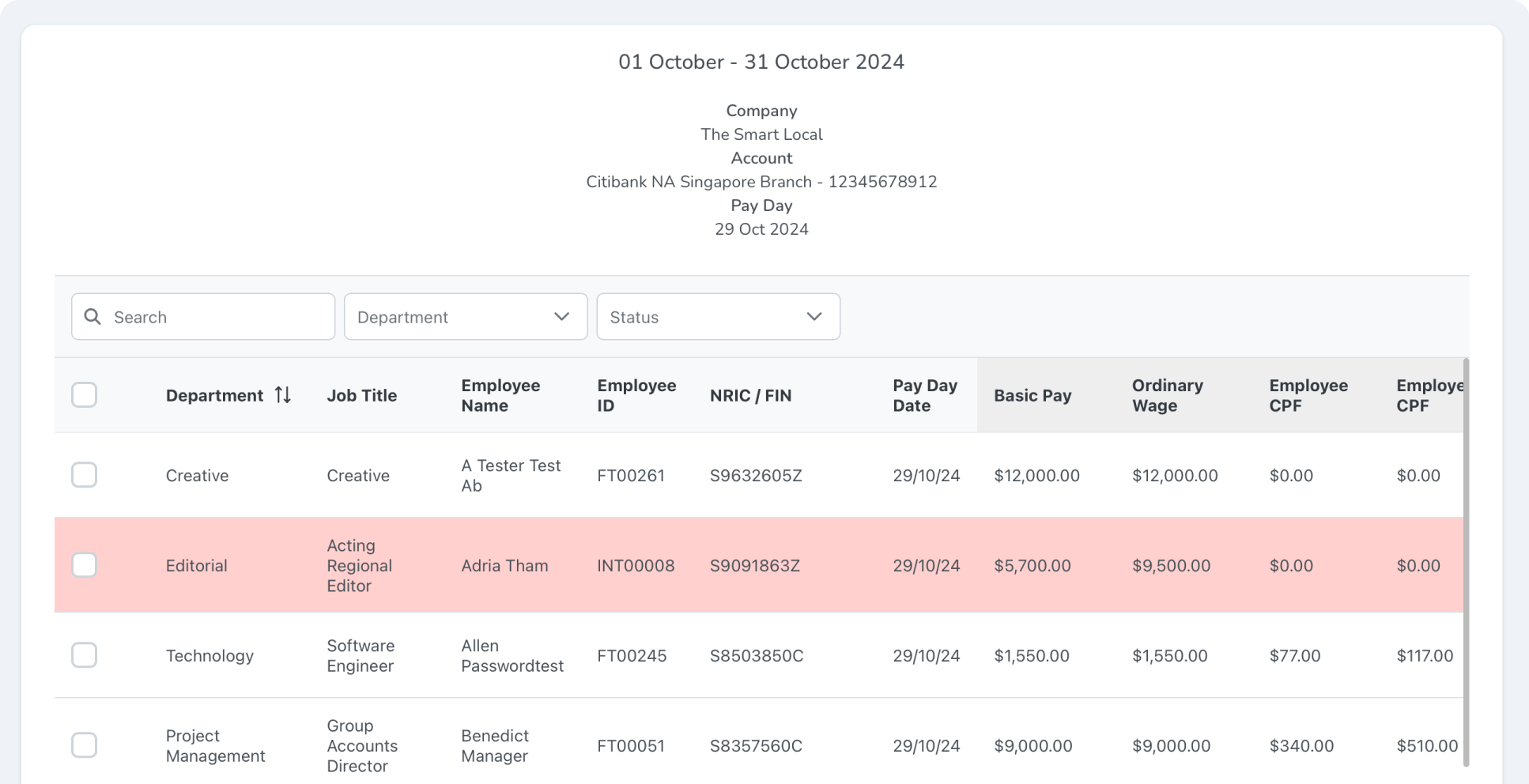
NeuHR’s claims module is built around a paperless workflow. Employees can submit claims digitally, claims can be vetted through endorsement, supervisors or admins can approve them, and supporting documents can be uploaded.
NeuHR also supports unlimited claim types, which matters because different companies reimburse different expenses: transport, meals, medical, training, subscriptions, project costs, or client entertainment.
Why GST Handling Matters in Singapore
For Singapore businesses, GST handling can also matter. NeuHR says its claims module can calculate and account for GST when the submitted claim does not already include GST. That small feature can save repeated finance checks when employees submit receipts in different formats.
Why Claim History Matters
The best claims system is not only faster for employees. It also gives management cleaner visibility. Claim history attached to an employee profile helps HR review reimbursement patterns, answer audit questions, and avoid losing context when a manager changes.
Claims Should Be Part of the HRMS Demo
Many companies evaluate payroll software first and leave claims as an afterthought. That is a mistake. Reimbursements affect payroll timing, finance control, employee trust, and audit readiness. If claims live outside the HRMS, HR still has to reconcile records manually.
A Better Claims Workflow
Instead of chasing receipts across chat and email, SMEs should move toward a standard workflow that every employee and manager understands.
- Employee submits the claim.
- The employee uploads the supporting document.
- The assigned reviewer endorses the claim.
- Supervisor or admin approves it.
- Finance reimburses and keeps the record.
- HR can retrieve claim history when needed.
Conclusion
If your current process depends on employees sending receipts to a group chat, the fix is not another spreadsheet. The fix is a workflow: submit, upload, endorse, approve, reimburse, and store.
For Singapore SMEs already evaluating payroll or HRMS software, NeuHR’s claims module should be tested in the same demo because claims affect both employee experience and finance control.